By Mike Holland, Owner
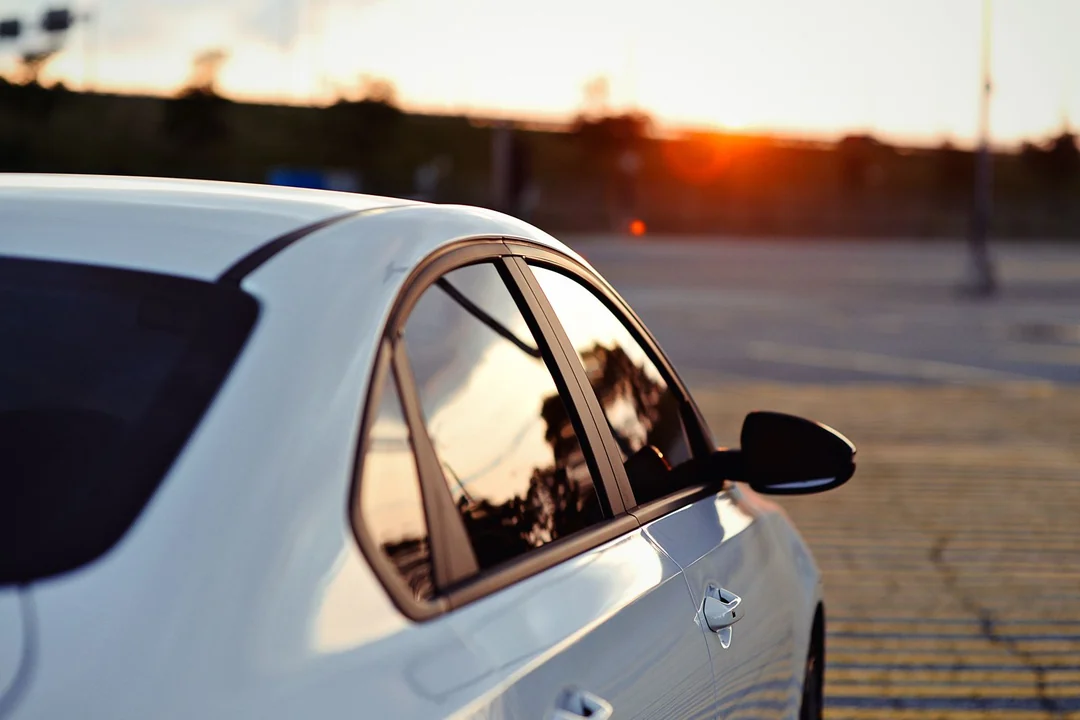
Yes, light ceramic tint blocks heat. At Level Up Detailing in Lexington, NC, our lightest shade is 50%, and Union’s published spec for its 50% ceramic film lists 42.8% of total solar energy rejected and 99.99% UV rejection. You keep a near-factory look and still cut heat, starting at $199 for two front windows.
If you live in West Winston-Salem, you know the drill. NOAA’s 1991 to 2020 normals for Smith Reynolds Airport average about 32.8 days a year at 90°F or hotter, with an average June to August high of 86.3°F. Plenty of drivers want relief from that heat but don’t want dark windows. So the big question is: does light ceramic tint block heat, or are you paying for the look alone? In this blog, we’ll walk through what 50% ceramic film really does for heat and UV, what the film makers publish, and what it costs.
Key Takeaways
- Light still works: Union’s 50% ceramic film lists 42.8% total solar energy rejected, and HITEK lists 56% for its 50% ceramic films.
- UV is covered at every shade: both makers list 99% or better UV rejection at 50%.
- Shade isn’t the whole story: darkness measures visible light, not total heat. A light ceramic film can outperform a darker, non-ceramic one.
- Same price at every shade: two front windows are $199, coupes, sedans, hatchbacks and trucks are $450, and non-commercial SUVs and vans are $499.
- Built to last: every tint job we install comes with a lifetime warranty.
How Much Heat Does 50% Ceramic Tint Reject?
A 50% ceramic film rejects a real share of the sun’s energy. Union and HITEK, the two brands we install, publish lab figures of 42.8% (Union) and 56% (HITEK) total solar energy rejected for their 50% ceramic films, with 99% or better UV rejection. That’s meaningful heat relief from a film that lets about half the visible light through.
Here’s what the two makers publish for their 50% ceramic films. These are the makers’ own lab figures, not tests we ran:
| 50% ceramic film | Visible light transmitted | Total solar energy rejected (TSER) | UV rejected |
|---|---|---|---|
| Union, 50% ceramic | 49.0% | 42.8% | 99.99% |
| HITEK, 50% ceramic | 54% | 56% | 99% |
Sources: Union Window Films ceramic spec sheet and HITEK ceramic film specs. Each maker offers more than one ceramic film, and we’ll help you pick the film and shade that fit your car.
Union also lists 80.2% infrared rejection for its 50% film. Infrared is the part of sunlight you feel as heat on your arm through the glass, and ceramic particles are what let a light film block so much of it without going dark.
What Is TSER?
TSER stands for total solar energy rejected. It adds up everything the film keeps out: visible light, infrared and UV. It’s the most honest single number for comparing heat performance, because it tells you how much of the sun’s total energy stays outside your car.
Does Light Ceramic Tint Block UV?
Yes. Union and HITEK, the two brands we install, both publish 99% or better UV rejection for their 50% ceramic films, the same strong UV protection you get from our darker shades. If you go light, you aren’t giving up UV protection.
That matters more than most people think. A 2016 JAMA Ophthalmology study measured car glass and found side windows blocked only 71% of UV-A on average (ranging from 44% to 96%), compared with 96% for windshields. Those numbers are for the glass alone, without tint. The EPA notes that UV is strongest from April through August, so a light ceramic tint installed this fall has you covered well before next spring. For more on UV and shade choices, read our guide to the best window tint shades for UV protection.
Does Darker Tint Always Reject More Heat?
Within the same film line, a darker shade does reject more total heat. Union’s 5% ceramic film lists 64.6% TSER, compared with 42.8% at 50%. But darkness alone doesn’t decide heat. The type of film matters, which is why we install ceramic film only.
HITEK puts it plainly in its FAQ: “Shade and heat performance are different properties.” Visible light transmission tells you how dark a film looks, not how much heat it stops. That’s why HITEK’s 50% ceramic films list 56% TSER, more than Union’s darker 35% ceramic film at 50.4%. A light ceramic film can keep a car cooler than many people expect.
So the real choice is about the look you want. If you like a darker look on the rear windows, darker shades go only on windows where they’re allowed, never the front sides. If you want the factory look all around, 50% ceramic still gives you real heat and UV protection. Our guide on how to choose window tint shades walks through every shade we offer: 5%, 15%, 20%, 35% and 50%.
How Much Does Ceramic Window Tint for Heat Reduction Cost?
Ceramic window tint for heat reduction at Level Up Detailing costs the same at every shade. Two front windows are $199, a full coupe, sedan, hatchback or truck is $450, and a non-commercial SUV or van is $499. Going light doesn’t cost more or less than going dark.
Here are our current prices, straight from our shop:
| Ceramic window tint (any shade, 5% to 50%) | Price |
|---|---|
| 2 front windows only | $199 |
| Coupes, sedans, hatchbacks and trucks (4 side door glass, a pair of quarter glass and the rear windshield) | $450 |
| Non-commercial SUVs and vans | $499 |
Every tint job comes with a lifetime warranty. Tinting a full car takes the majority of a day, so it’s a drop-off and pick-up job. A $50 nonrefundable deposit holds your tint appointment. See everything we offer on our ceramic window tint page.
Is Light Ceramic Tint Worth It in West Winston-Salem?
Yes. If you want your car to stay cooler through Forsyth County summers without changing its look, light ceramic tint is a smart buy. You get makers’ published heat rejection of roughly 43% to 56% at 50%, 99% or better UV rejection and a lifetime warranty.
The heat is real. The National Weather Service explains that the sun’s energy heats the surfaces inside a parked car, and “a dark dashboard or seat can easily reach temperatures in the range of 180 to over 200°F.” Every bit of solar energy the film keeps out is energy that doesn’t soak into your seats and dash.
Our shop in Lexington is about 19 miles from West Winston-Salem, roughly 35 minutes via NC-150, I-40 and US-421. That makes it an easy drive for a drop-off and pick-up day. Learn more on our window tint in Winston-Salem page.
Why Triad Drivers Choose Level Up Detailing
Our shop is at 275 Crystal Ridge Dr in Lexington, and we bring 10+ years of combined experience. We install ceramic window tint only, from Union and HITEK, and we’re an authorized ceramic coating installer offering Owner’s Pride warrantied coatings. Owner Mike Holland is an emergency rescue helicopter pilot, and we’ve earned more than 200 customer reviews.
T Leigh brought in a 2026 RX450h+ for a 7-year ceramic coating and tinted windows and wrote, “My car looks awesome.” That’s the goal on every car: a finish you’re proud of and windows that keep the heat out.
Areas We Serve
We work with drivers from Lexington, Winston-Salem, Clemmons, Lewisville, Kernersville, High Point, Thomasville, Greensboro, Summerfield, Oak Ridge and Salisbury.
Frequently Asked Questions
Does 50% ceramic tint block heat?
Yes. Union’s published spec for its 50% ceramic film lists 42.8% total solar energy rejected, and HITEK lists 56% for its 50% ceramic films. That’s real heat relief from our lightest shade. Call or text (336) 780-7868 to set up an appointment.
Does light ceramic tint block UV?
Yes. Union and HITEK, the two brands we install, both publish 99% or better UV rejection for their 50% ceramic films, the same strong UV protection you get with darker shades. Call or text (336) 780-7868 to set up an appointment.
Does darker tint always reject more heat?
Within the same film line, darker shades reject more total heat, but darkness alone doesn’t decide heat. A light ceramic film can reject more heat than a darker film from another line. Call or text (336) 780-7868 to set up an appointment.
What is the lightest tint shade Level Up Detailing installs?
Our lightest shade is 50% ceramic film. We also install 35%, 20%, 15% and 5%, and every tint job comes with a lifetime warranty. Call or text (336) 780-7868 to set up an appointment.
How much is 50% ceramic tint?
The shade doesn’t change the price. Two front windows are $199, coupes, sedans, hatchbacks and trucks are $450, and non-commercial SUVs and vans are $499. Call or text (336) 780-7868 to set up an appointment.
What does TSER mean on a tint spec sheet?
TSER means total solar energy rejected. It counts the visible light, infrared and UV a film keeps out, so it’s the best single number for comparing heat performance. Call or text (336) 780-7868 to set up an appointment.
Can you get clear ceramic tint?
Our lightest ceramic tint is 50%, which keeps a near-factory look while still rejecting heat and 99% or better of UV, according to the film makers. Call or text (336) 780-7868 to set up an appointment.
Final Thoughts on Whether Light Ceramic Tint Blocks Heat
Light ceramic tint blocks heat, and it does it without the dark look. At 50%, Union and HITEK, the two brands we install, publish lab figures of about 43% to 56% total solar energy rejected and 99% or better UV rejection, at the same price as any other shade and with a lifetime warranty. For West Winston-Salem drivers who want a cooler car and the factory look, it’s worth it.
Want the factory look without the heat? Call or text us at (336) 780-7868, or send us your vehicle details through our contact page, to set up an appointment. You’ll find us at 275 Crystal Ridge Dr, Lexington, NC 27295.