By Mike Holland, Owner
If you’ve ever looked at your car and asked, “Why do headlights turn yellow?” you’re not alone. That foggy, yellow haze creeps in slowly, and most drivers don’t notice it until the nights get longer. With the clocks falling back this Sunday, November 1, more of your drive home will happen in the dark. In this blog, we’ll explain what causes yellow headlights, how much light restoration really brings back, and when replacement makes more sense.
Key Takeaways
- Cause: sunlight breaks down the protective coating on plastic headlight lenses, and AAA says yellowing or clouding can start in as little as three to five years.
- Light loss: AAA research found yellow or clouded headlights put out only about 22% of the light they made when new.
- Restoration works, with limits: professional and DIY restoration both bring output back to about 70% of a new lens, according to AAA.
- Replacement: new original-equipment headlights restore 100% of output, but some assemblies cost $1,000 or more.
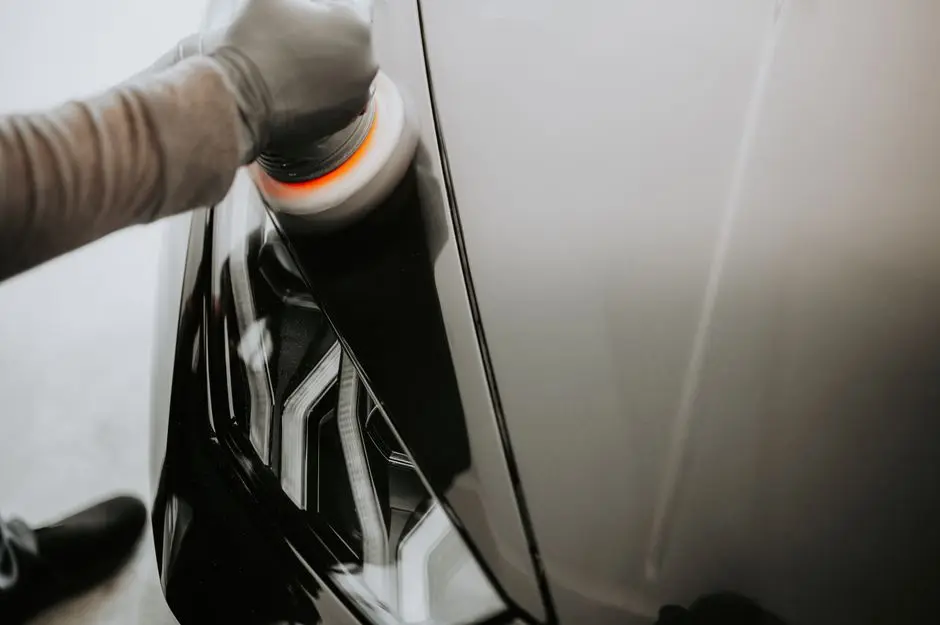
- Our price: Headlight Restoration starts at $199 for both headlights in the Level Up Detailing online shop. We wet sand off the oxidation, polish the lenses, and apply a new clear coat.
Why Do Headlights Turn Yellow?
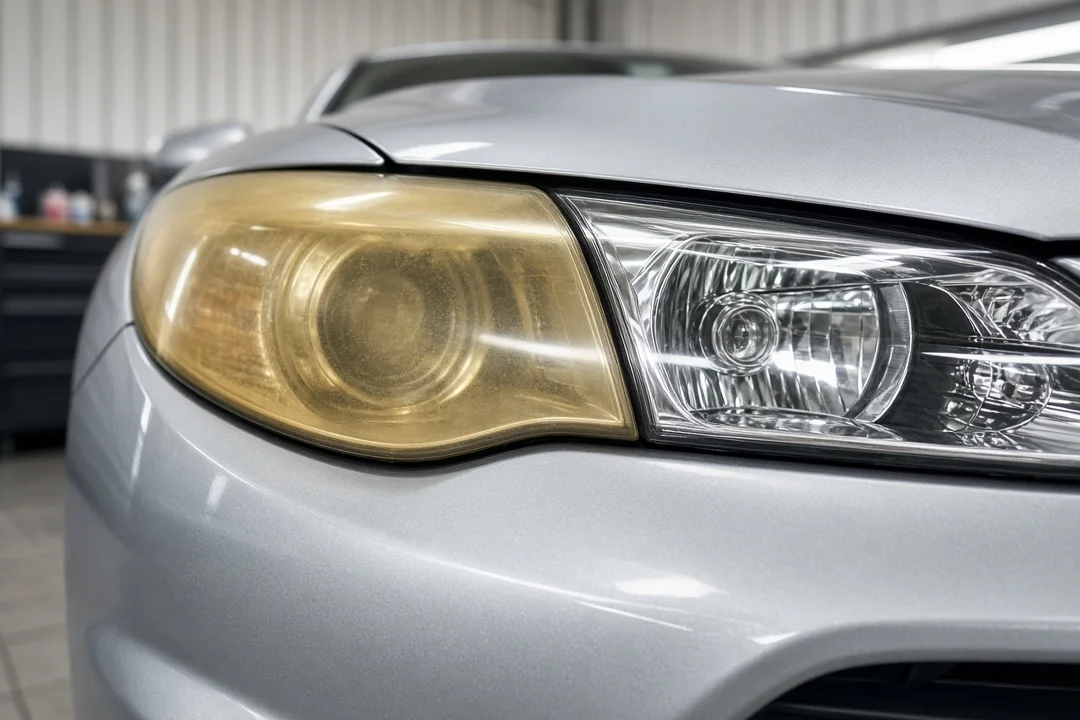
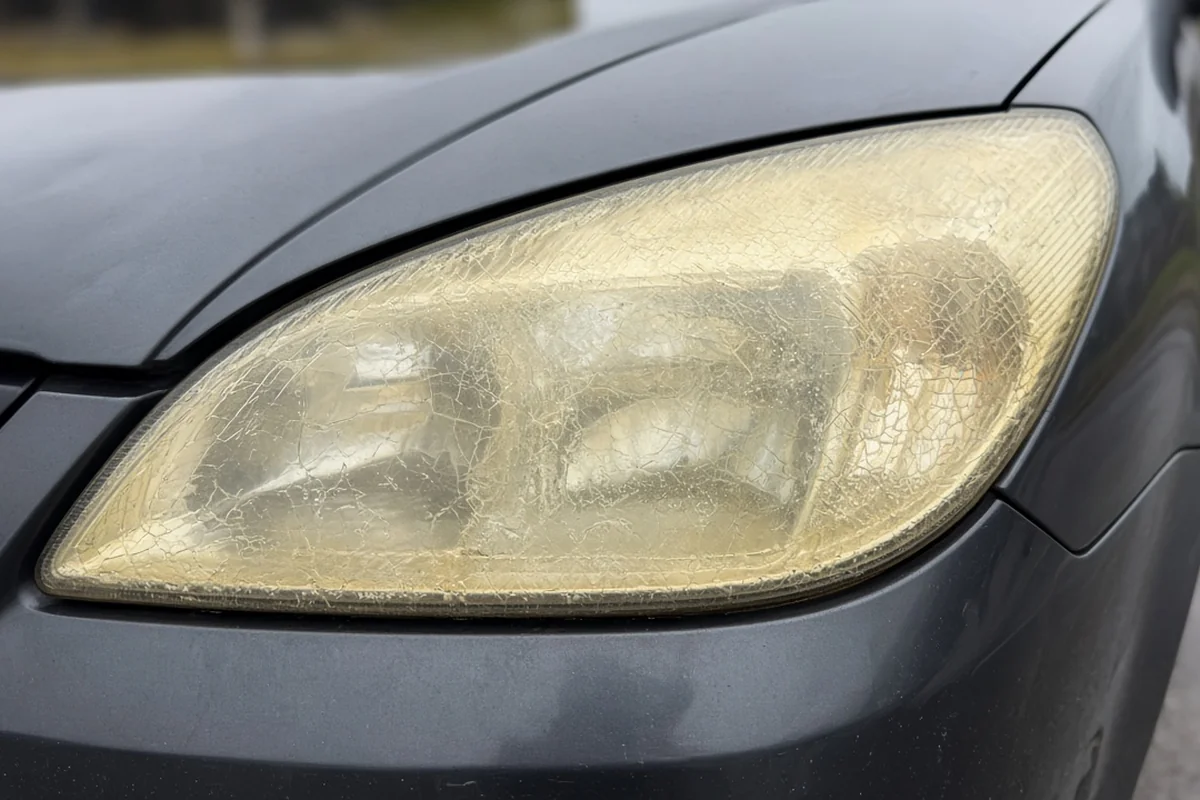
Plastic headlight lenses have a clear protective coating on top. As you drive and park outside, sunlight breaks that coating down. Once it fails, the plastic underneath starts to yellow and cloud over. AAA says a brand new headlight can yellow or cloud in as little as three to five years.
Consumer Reports describes the same thing: the coating on the lens is what deteriorates as headlights age, particularly in areas where cars get a lot of sun. That’s why a car that lives in a driveway usually yellows faster than one that sleeps in a garage.
Why You Notice It in the Fall
The damage mostly happens in the warm months. The EPA notes that UV levels peak from April through August and drop off in fall and winter. But fall is when you actually see the problem, because that’s when you start driving after dark again.
Do Cloudy Headlights Make It Harder to See at Night?
Yes. AAA research found that yellow or clouded headlights produce only about 22% of the light they did when they were new. AAA’s director of automotive engineering also warns that any lens deterioration reduces visibility and increases glare for oncoming drivers. Less light on the road means less time to react to what’s ahead.
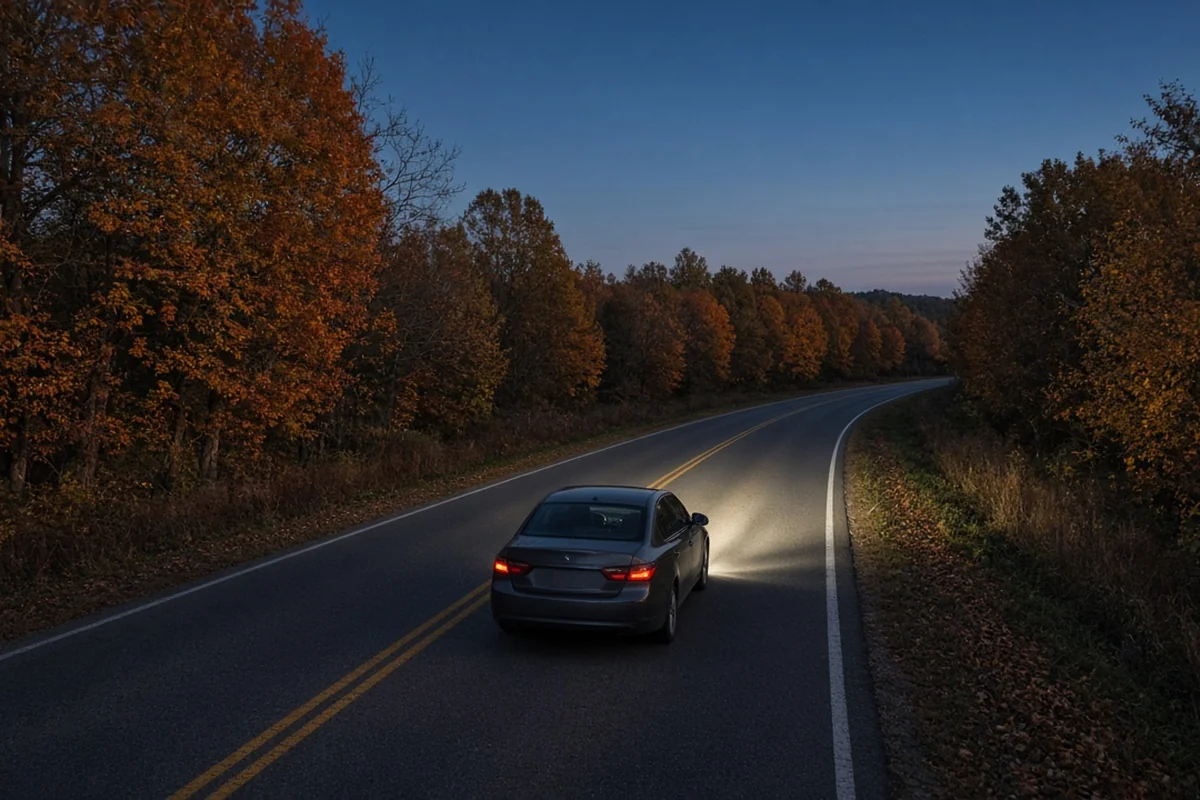
That matters more than usual right now. According to the U.S. Naval Observatory, sunset in Lexington drops from 6:26 PM on Saturday, October 31, to 5:25 PM on Sunday, November 1, once daylight saving time ends. A lot of evening commutes across the Triad move into the dark overnight.
It’s also deer season. NCDOT’s animal crash report counted 65,470 animal crashes statewide from 2023 to 2025, and about 90% involved deer. November alone accounted for 24% of them, with peaks around dawn and dusk. Guilford County ranked second in the state with 2,171 crashes, and that county includes drivers from Greensboro and High Point. Davidson County, home to Lexington and Thomasville, logged 1,105.
NCDOT’s deer collision tips include using your high beams when you can and watching for eyes reflecting in your headlights. Both work better when your lenses let the light through.
Does Headlight Restoration Actually Work?
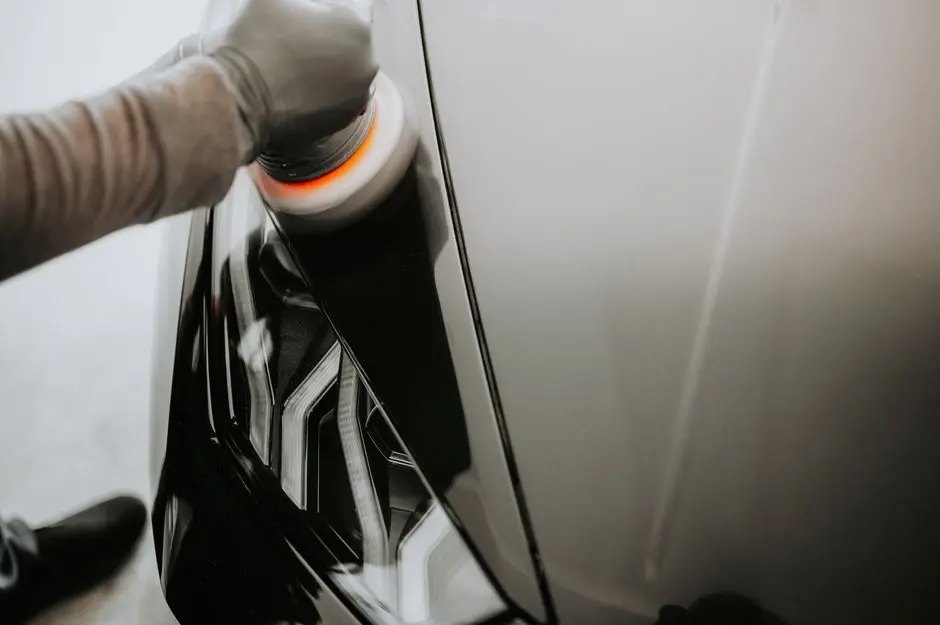
Yes, headlight restoration works, but it isn’t magic. Restoration sands away the damaged outer layer of the lens, polishes it clear, and adds a protective layer. AAA found that both professional and DIY restoration bring light output back to about 70% of a brand new lens, a big step up from the 22% of a badly clouded one.
Here’s how the options compare, based on AAA’s testing:
| Headlight Condition | Light Output vs. a New Lens | What to Know |
|---|---|---|
| Yellowed or clouded lens | About 22% | Less light on the road and more glare for other drivers |
| Restored lens (professional or DIY) | About 70% | The budget-friendly fix; not permanent |
| Aftermarket replacement headlight | 83% to 90% | A less expensive alternative to original-equipment parts |
| New original-equipment (OEM) headlight | 100% | The only way to fully restore output; some assemblies cost $1,000 or more |
AAA also found that glare after restoration still exceeded Department of Transportation criteria. So a restored lens is a real improvement over a cloudy one, but it isn’t the same as a brand new headlight. Be wary of anyone who promises “like new” results.
How Long Does Headlight Restoration Last?
Headlight restoration isn’t permanent. In Consumer Reports’ tests of DIY restoration kits, haze usually became noticeable again after about a year. AAA says professional restoration tends to give better results and last longer because a UV protectant is applied and cured during the process. At Level Up, we finish every restoration by re-clear-coating the headlights, which lasts for years. How you park and care for the car afterward matters too.
DIY kits are the cheapest option, and AAA says they also last the shortest time before you need to redo them. Restoration works by sanding away damaged lens material, so the number of times a headlight has already been restored matters when you decide what to do next.
Should You Restore or Replace Your Headlights?
For most cars, restoring is the smart first step. It costs far less than new assemblies, which can run $1,000 or more on some vehicles. AAA says replacement makes more sense when the lens is severely deteriorated, when restoration still leaves a rough or cloudy surface, or when the headlight has already been restored several times.
Consumer Reports suggests weighing the cost of restoration against new headlight housings and how long you plan to keep the car. The newer the car, the more expensive the headlights tend to be. If you’re not sure which camp your lenses fall into, we’ll take a look and tell you honestly.
How Can You Keep Headlights From Turning Yellow Again?
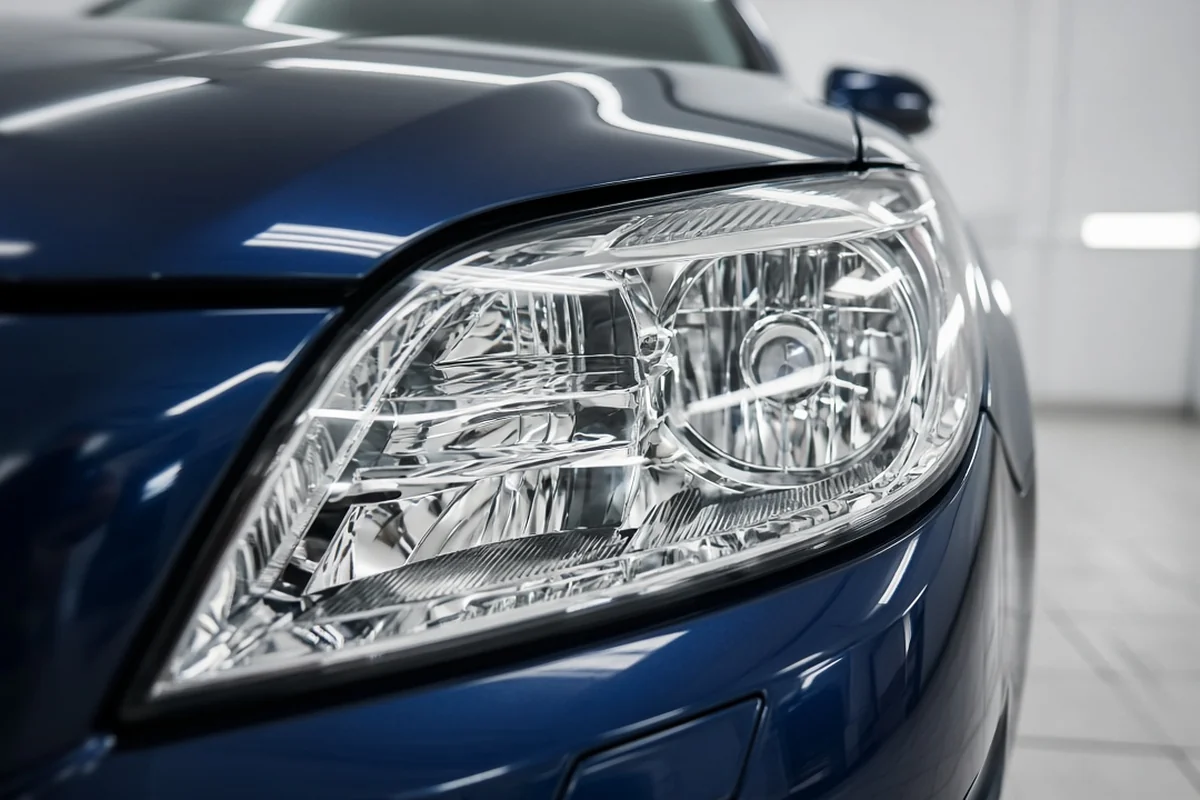
Nothing permanently stops headlights from yellowing, but you can slow it down. AAA recommends waxing your headlights whenever you wax your car, about two to four times a year, for some UV protection. Parking in a garage helps too.
If you’re thinking about longer-term protection for the whole vehicle, our ceramic coating packages include applying the selected coating to the body, trim, wheel faces, and head and tail lights.
What Does NC Inspection Check on Headlights?
North Carolina’s annual safety inspection includes your lights, as required by G.S. 20-183.3. G.S. 20-129 requires headlamps from sunset to sunrise and whenever your wipers are on in bad weather, and it says they must be “in good operating condition.” If your headlights look dim, have them checked well before inspection day.
How Much Is Headlight Restoration at Level Up Detailing?
Headlight Restoration starts at $199 for both headlights at Level Up Detailing, the price listed in our online shop. We wet sand the oxidation off, polish the lenses, and re-clear-coat them so the results last for years. It’s listed as an add-on service, so it’s easy to pair with a full detail from our car detailing services in Lexington, NC. To set up an appointment, call or text us at (336) 780-7868.
Clearer lenses help both safety and appearance. For a closer look at the upside, read our post on the benefits of headlight restoration.
Why Lexington Drivers Choose Level Up Detailing
Level Up Detailing is a locally owned shop at 275 Crystal Ridge Dr in Lexington, NC. Our team brings more than 10 years of combined car detailing and ceramic coating experience, and we’re an authorized ceramic coating installer offering Owner’s Pride warrantied coatings. Owner Mike Holland is also an emergency rescue helicopter pilot, and he brings that same focus to every vehicle we work on.
We’ve earned more than 200 customer reviews. One Google reviewer wrote: “Mike did an amazing job — and also took the time to explain in detail how to wash/dry it properly — and what products to use on it.” We’ll always give you a straight answer about whether your headlights need restoring or replacing.
Areas We Serve
Our shop is in Lexington, and we welcome drivers from across the Triad and beyond, including Winston-Salem, Clemmons, Lewisville, Kernersville, High Point, Thomasville, Greensboro, Summerfield, Oak Ridge, and Salisbury, NC. If your headlights have gone yellow, we think you’ll find the drive is worth it.
Frequently Asked Questions
Why do headlights turn yellow?
Plastic headlight lenses have a protective coating that sunlight breaks down over time. Once it fails, the lens yellows or clouds. AAA says this can start in as little as three to five years.
Does headlight restoration actually work?
Yes. AAA testing found restored lenses reach about 70% of a new lens’s light output, compared with about 22% for yellow or clouded lenses.
Is it better to restore or replace headlights?
Replacement with original-equipment parts is the only way to get 100% of the light back, but some assemblies cost $1,000 or more. Restoration is the budget option unless the lens is severely worn or has already been restored several times.
How long does headlight restoration last?
It isn’t permanent. Consumer Reports found haze from DIY kits usually becomes noticeable again after about a year, and AAA says professional restoration with a cured UV protectant tends to last longer. At Level Up, we re-clear-coat the headlights, which lasts for years.
How can I keep my headlights from yellowing again?
AAA suggests waxing your headlights when you wax your car, about two to four times a year, and parking in a garage when you can. Nothing stops yellowing permanently.
How much is headlight restoration at Level Up Detailing?
Headlight Restoration starts at $199 for both headlights, as listed in the Level Up Detailing online shop. It includes wet sanding, polishing, and a new clear coat.
Final Thoughts on Yellow Headlights and Headlight Restoration
Yellow headlights come from sun damage to the lens coating, and they cost you real light at night. Restoration won’t make a lens brand new, but AAA’s numbers show it brings back a lot of the brightness you lost, for far less than new assemblies. With darker evenings and deer season here, now is a good time to take a look.
Ready for clearer headlights? Call or text us at (336) 780-7868, or send us your info through our contact page, to set up your Headlight Restoration appointment. You’ll find us at 275 Crystal Ridge Dr, Lexington, NC 27295.